

What’s in a name?
en-SEL-uh-dus (enˈsel.ə.dəs)
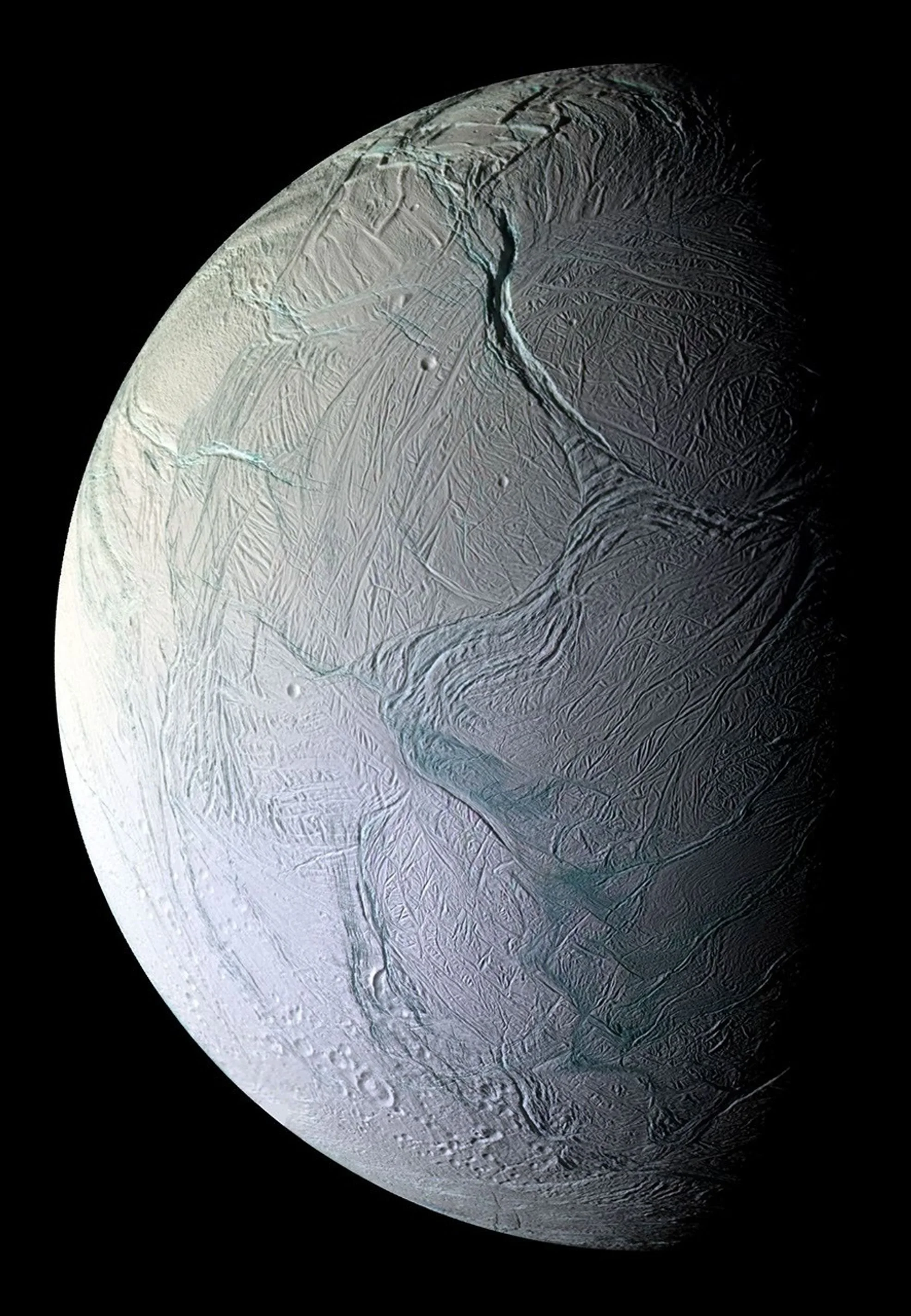
astronomy: the sixth largest satellite of Saturn that has a diameter of approximately 310 miles (500 km) and is characterized by geological activity and the presence of liquid water
Why Enceladus
Some businesses get named for what they do. We got named for something we believe.
Enceladus is a small, icy moon orbiting Saturn. Nothing special to look at — until NASA's Cassini spacecraft flew past it and found something nobody expected.
In 2005, Prof. Michele Dougherty's team noticed strange little distortions in Saturn's magnetic field. Most people would have shrugged it off as noise. She didn't. She was convinced something real was going on — and she talked mission engineers into steering Cassini back for a closer look.
That second pass found jets of water vapour bursting from cracks in the moon's surface. Later flybys revealed why: an entire ocean hiding beneath the ice, with the right chemistry and energy to maybe — just maybe — support life. A moon nobody thought twice about ended up reshaping how we think about where life could exist.
That's the story we borrowed our name from.
Consultancy doesn't always have the best reputation — "give me your watch and I'll tell you the time," and all that. There's a place for confirming what people already sense to be true. It's just not what gets us out of bed. We'd rather help you see something from a different angle. Chase the connection nobody's made yet. Ask the question that's been sitting there unasked. Follow the evidence, even when it leads somewhere you didn't expect.
There's a second reason Enceladus stuck with us: it's proof that life finds a way in the harshest conditions imaginable. Earth's taught us the same lesson over and over — difficult doesn't mean impossible. It just means you need to evolve, to operate differently.
That's what we bring to the businesses we work with — the ones dealing with shifting markets, tightening regulation, resource pressure, and the push toward a more circular economy. The best answers rarely announce themselves. But they're usually simpler than you'd think. And like Cassini, sometimes the biggest breakthrough comes from looking again at something you thought you already understood.
Look again. Look closer. Look differently.